博文

A collection of compounding plant growth regulators, compounding with fertilizers, and compounding with fungicides
图片
As a rapidly developing science and technology, plant growth regulators regulating plant growth and development have been used more and more widely in agriculture, forestry, fruit and vegetable production. In recent decades, the mixture of plant growth regulators has appeared in many applications such as rooting, fruit setting, dwarfing, dormancy, drying, defoliation, ripening, sweetening, and coloring, and the development momentum is rapid. The reason is that there can be synergistic and additive effects in compound application, which can reduce the amount of use and improve the application effect. At the same time, it also expands the scope of application, complements each other's strengths, overcomes the shortcomings of single use, and can achieve high quality and high yield. The compounding of commonly used plant growth regulators can be divided into: compounding plant growth regulators, compounding plant growth regulators and fertilizers, compounding plant growth regulators an...
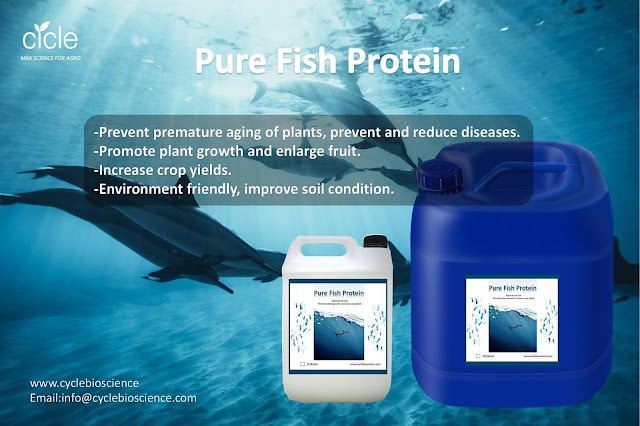
What exactly is fish protein? What is the effect of fish protein? How should fish protein be used in Agriculture?

图片
What exactly is fish protein? What is the effect of fish protein? How should fish protein be used? To be honest, I know that fish protein is made of low-value fish, and I also know several production processes of fish protein liquid fertilizer (there are two processes, acid hydrolysis and enzymatic method, among which acid hydrolysis is easy to destroy the activity of fish protein, enzymatic method It is more active), and even knows how to distinguish the quality of a fish protein (you can drop the fish protein on a paper towel. If the paper towel is soaked in water, it means that the fish protein has a large water content and is not pure. It may even be made of water!). Since I was exposed to fish protein, I have encountered two extremes: Those who approve of fish protein say that fish protein is good for everything. It can prevent premature aging, take root, promote growth, improve the ability to resist freezing and cold, and preserve flowers and fruits . Someone who don't recogn...

Difference between Mineral fulvic acid and Biological fulvic acid

图片
First of all , in terms of formation, mineral-sourced potassium fulvic acid residues of animals and plants are formed after tens of millions of years of soil microbial transformation, and what we call mineral-sourced fulvic acid is a small molecular organic compound extracted from lignite It is the most valuable part of humic acid for agricultural production and soil restoration. Biochemical products are currently made from sucrose, monosodium glutamate, and paper scraps. Secondly , the amount of mineral potassium fulvic acid is only 1/10 of the amount of biochemical and biochemical potassium fulvic acid. Taking bottom application as an example, the amount of mineral source per mu is 300-500g, while the amount of biochemical potassium is more than 5-10 kg. Third , in terms of composition, because the mineral fulvic acid is mainly extracted from lignite formed hundreds of millions of years, it is rich in functional groups such as hydroxyl, carboxyl, phenolic hydroxyl, and methoxyl group...

Daminozide used on chrysanthemum, dwarf plant and prolong flowering

图片
Daminozide, also is called B-NINE, is a plant growth regulator widely used on dicotyledon fruits, crops and horticultural plants to improve the balance between vegetative growth and fruit production, to synchronize fruit maturity, and to improve fruit quality. It can inhibit excessive stem growth, thickening plant structure and enchance germination and fruiting. Analysis Results Appearance White crystal granule Purity ≥85% Water Insoluble ≤0.2% Wetting time ≤120s Benefits --Inhibits the stem growth and breaks the apical dominance(can inhibit the generation of Gibberellic acid);  --Inhibits the internodal elongation, resists to lodging; --Improves the abilities of stress tolerance; --Promotes the lateral bud growth; --Enhances or inhibits the photosynthesis, depends on the concentration; --Improves the respiration intensity of root, slows down the respiration of above ground parts of crops. If you have any interest, please feel free to contact us, Anne Chou Email: anne@cyclebioscien...

Paclobutrazol promotes flowering and fruiting on Mango tree

图片
  THE EFFECTS OF PACLOBUTRAZOL One method to manipulate flowering is to use the plant growth regulator, paclobutrazol. The post- harvest application of a small amount of paclobutrazol to the soil significantly promotes flowering and fruiting in the following year. Trials over the last two years have shown the following benefits from the treatment: A significant increase in flowering leading to increased yields. The early flowering considerably enhanced fruit maturity. Treated trees flowered three to four weeks early, which reduced the time to fruit maturity by at least two weeks. Visually, the fruit developed a better external colour. Seasonal cycle Application Effect Associated Benefits Foliage Growth Controls Tree Vigour ·  Reduces pruning costs ·  Allows higher density planting ·  Easier to achieve optimum tree shape ·  Rejuvenation of older trees Flowering Earlier flowering Cycle Increased flowering uniformity Increased flowering intensity ·  Escape som...

N6-(delta 2-Isopentenyl)-adenine(2-IP), use for Plant Tissue Culture

图片
 As a plant growth regulator of lower toxicity,  N6-(delta 2-Isopentenyl)-adenine 2IP can stimulate callus differentiation, inducing bud, promoting apple, pear, axillary bud rose branches, and promote melons (tomatoes, melons, apples, grapes, etc.), fruit, leaf vegetables, spinach, celery, etc.). Uses & Benefits: 1) stimulate plant cell division and the growth and development of active growing parts.  2)can be used on plant tissue culture to promote the callus of germination; 3)can be used on rice, soybean and corn growth regulator, and other cash crops of fruits and melns, to make a yield-increasing with 20%-30%. if you have any interest, please feel free to contact us Email:anne@cyclebioscience.com Whatsapp:+86 15050351426

Salicylic acid, a new type of natural phenolic plant regulator salt resistance, to anti drought resistance, low temperature resistance, ultraviolet resistance, and heavy metal resistance.

图片
Salicylic acid is a metabolite of phenylalanine and a new type of natural phenolic plant regulator. It is an important endogenous signal molecule that can activate plant allergic reactions and system-acquired resistance. Physiological effects in plants are also widely manifested in the regulation of physiological processes such as plant growth, development, maturity, and senescence, and in the induction of anti-stress reactions such as salt resistance, drought resistance, low temperature resistance, ultraviolet resistance, and heavy metal resistance. Uses & Benefits : 1) Improve plant resistance  - Treatment with 50-300mg / L salicylic acid solution at the seedling stage can improve the antioxidant capacity of tomato seedlings, increase the content of soluble proteins and soluble sugars, and enhance root vitality, thereby enhancing tomato's resistance to low temperature, drought, salt stress and heavy metals. Ionic tolerance. 2) Improve fruit storage and freshness  - ...